Zach Young, Director of Music Ministries
The season of Advent marks the start of the Christian year and is celebrated the four Sundays
prior to Christmas Day. The word advent comes from the Latin adventus, which means
“coming.” It is a celebration of the Coming One, Jesus Christ, and has been observed by the
Church for 15 centuries. Advent is a time set aside for Christians to devote special attention to
the joyful anticipation and hope that should mark our attitude toward Christ’s second coming
as the risen, ascended, and reigning Lord, even while we remember His first coming as
Emmanuel (God with us), born in humility to Mary and Joseph in Bethlehem.
Advent is best viewed as a season of preparation, reflection, watchfulness, and repentance.
Parables like the story of the wise and foolish virgins awaiting the bridegroom (Mt. 25:1–13)
remind us of the importance of readiness, as we wait expectantly for our coming Bridegroom.
Advent helps (re)focus our attention in wise and healthy ways, so that we can avoid the foolishness
of spending all our time, energy, and resources on the hustle and bustle of shopping and partying
that fills the weeks leading up to Christmas.
The primary way that we do this in Advent is through reading and meditating on Scripture
passages that prophesy and proclaim Christ’s birth and second coming, as well as highlighting
the biblical themes traditionally associated with Advent: Hope, Peace, Joy, and Love. Many
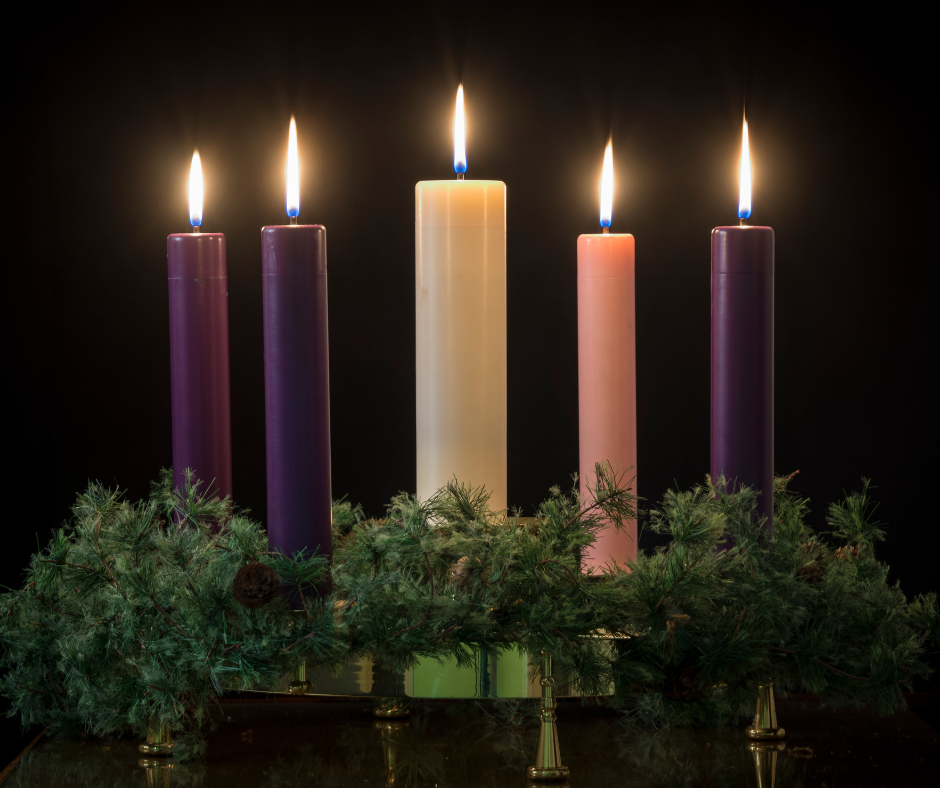
churches accompany their Advent readings with the lighting of candles in the Advent wreath,
which lends symbolic significance to the season. The circle reminds us of God Himself, His
eternality and endless mercy, which has no beginning or ending. The green speaks of the new
and eternal life we have in Him. Candles symbolize the light of God coming into the world
through the birth of His Son. Jesus is the Light of the World who breaks into the darkness to
bring newness, life, and hope. As those who have received the Light, we are called to reflect the
light of God’s grace to others (Is. 42:6; Mt. 5:14).
The colors and placement of the candles contain rich symbolism as well. The four outer
candles represent the four centuries of waiting between the prophet Malachi and the birth of
Christ. Purple is the color of royalty (to welcome the King) and is also the color of suffering
used during Holy Week. This points to an important connection between Jesus’ birth and
death. The shadow of the cross looms over the manger. The pink candle symbolizes the joy
that is ours through Christ. The white “Christ candle” is lit on Christmas Eve, and its
central location reminds us that the Incarnation is the heart of the season.
As we gather for worship during Advent, “may the God of hope fill [us] with all joy and peace in
believing, so that by the power of the Holy Spirit [we] may abound in hope” (Romans 15:13).

Steps of Faith
Pastor Benny Collins, Assistant Pastor of Outreach/Interim Youth Pastor Steps of faith do not always come easily. We know that